Hi Everyone! Another week is over and here we are to Sunday again! I hope your week has been a great one, safe, healthy and productive! Welcome back as we dive into Part Seven of our Fabulous Fruits series. Tonight’s post will be all about pomegranates, raspberries and strawberries.
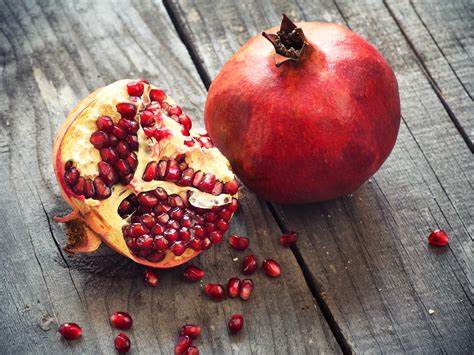
Pomegranates have been used to treat bad breath, sore throats, diarrhea, and fevers. The peel contains about 30 percent tannin, which is an active astringent substance. Pomegranate seeds are edible and are high in fiber. Key nutrients in pomegranates include calcium, phosphorus, iron, sodium, potassium, vitamin C, magnesium, fiber, fructose, glucose, sucrose, zinc, copper, vitamin B, vitamin E, folate, lipids and beta-carotene. Choose pomegranates that are heavy for their size, with a bright color and a blemish-free skin. Ripe pomegranates should be stored in the fridge and will keep for up to one month. The seeds, when packed tightly into an airtight container in the freezer, will keep for up to three months. Wash pomegranates under cool water before cutting them to rid them of any mold or bacteria, which can be carried on the knife from the skin into the fruit. Cut the fruit in half and pry out the seeds, removing any of the light-colored membrane that may adhere to them.
Raspberries are good for the liver, muscles, blood and kidneys and protect against viruses. Raspberries also balance the nervous system. Raspberries have been used to treat diarrhea, frequent urination, nervousness, and depression. The entire fruit is eaten! Key nutrients in raspberries include calcium, folate, phosphorus, iron, manganese, potassium, sodium, silicon, fructose, glucose, sucrose, zinc, vitamin C, vitamin E, fiber, copper, vitamin B, niacin, lipids, beta-carotene, alpha-carotene, tannin and pectin. Select raspberries with a uniform color. They should be plump and tender. Avoid ones that are mushy or bruised. Raspberries should not have stems or caps attached. Pass on berries that are leaky or moldy or are wet or have stained spots on the container. Once home, immediately remove any overripe berries as these will hasten the decaying process of the other berries. Raspberries should be used within two days after purchasing. Frozen, they will keep for up to twelve months. Sort the berries before serving and discard any that have turned bad. Wash them quickly under cold water. Do not wash berries until you are ready to eat them. They are very fragile and should be handled with care.
Strawberries can help prevent night sweats, lower blood cholesterol levels, dissolve tartar deposits on teeth and protect against viruses. Strawberries have been used in the treatment of strep infections, scurvy, anemia, eczema, diarrhea and acne. Strawberries contain salicylates, the same compounds used to make aspirin. Researchers believe these compounds may discourage the formation of unwanted blood clots. The entire fruit is eaten!! Key nutrients in strawberries include vitamin C, folate, potassium, vitamin B, iron, fiber, calcium, magnesium, phosphorus, sodium, fructose, glucose, sucrose, zinc, copper, manganese, lipids, vitamin E, pectin, beta-carotene, and gallic acid. Choose clean and dry berries with a full red color, bright luster, firm flesh and a cap stem still attached. Avoid berries with large colorless or seedy areas or a dull and shrunken appearance, or that are overly soft or have mold. Always open a container of berries upon bringing them home and remove any berries that overripe. Berries that are overripe will hasten the decaying process of the other berries. Strawberries should be used within two days after purchasing. They can be frozen and kept for up to twelve months. Wash strawberries thoroughly. They are at the top of the list of foods that have pesticide residue. Sort the berries before serving and discard ones that have turned bad. Wash the berries quickly under cold water, and remove the caps and stems. Do not wash berries until you are ready to eat them. A couple of words of caution: strawberries contain oxalic acid, which can aggravate kidney and bladder stones in some people. Oxalic acid may interfere with the body’s ability to absorb iron and calcium. If you take supplements of these minerals, do not take them at the same time you eat strawberries!
RECIPES:
Pomegranate Power Boat Smoothie. Take 1 pomegranate, juice of, 1 avocado, peeled and pitted, 10 strawberries, fresh or frozen, 3 teaspoons of Maca powder. Put all ingredients in a blender. Blend until you get a smoothie like consistency. Serve chilled.
Strawberry Citrus Infusion. Take 1 cup of sliced strawberries, 1 grapefruit or orange (or you can use 2 lemons or limes) sliced, 6 cups of water. Put the fruit into a pitcher and muddle for 1 minute if you wish. Add the water and chill for 1 to 8 hours before serving.
Sunny Strawberry and Cantaloupe Salad. Take 1 cup of sliced fresh strawberries, 1 cup of cubed cantaloupe, 1/2 cup of cubed low fat or skim mozzarella cheese, 2 tablespoons of raspberry vinaigrette, 1/2 cup of fresh raspberries, 1 tablespoon of sunflower seeds and thinly sliced fresh mint leaves (optional). Combine the cheese, cantaloupe and strawberries in a large bowl. Drizzle vinaigrette over the mixture and toss until coated. Add raspberries and stir gently; place sunflower seeds on top just before serving. Sprinkle mint on top if preferred.
Strawberry, Cucumber and Honeydew Salad. Take 1 container (16 ounces) of fresh strawberries, halved, 1 cucumber, halved lengthwise and cut into slices, 1 cup of cubed honeydew melon, 3 tablespoons of honey, 2 tablespoons of lime juice and 1 teaspoon of grated lime zest. Combine honeydew, cucumber, and strawberries in a large bowl. Chill till serving. Mix the remaining ingredients in a small bowl. Before serving, spoon over strawberries mixture. Gently toss to coat.
Have a wonderful start to your new week! Thank you for stopping by! Next week’s post will be the last installment of this series. We will showcase plums, tangerines, and watermelon! Then we will begin a journey exploring the world of grains and some great recipes! Stay safe and well!
“Successful and unsuccessful people do not vary greatly in their abilities. They vary in their desires to reach their potential.” John Maxwell
 Lemon and Rosemary