Welcome back everyone to another Wednesday post! Whew! Is it just me or is your October flying by quickly too? It has been a beautiful, windy, crisp fall day here and it is nice to have the smell of changing leaves and burning wood in the air! Thanks for being here tonight. We are on to Part Two of our Nuts and Seeds series and we feature 4 different ones!
Flaxseeds are a nutty-flavored seed and taste great sprinkled on cereal, yogurt, in soups and on salads. Flaxseed flour and ground flaxseed can be added to breads, muffins, cookies, and other baked goods. The oil of flaxseed is the richest source of omega-3 linolenic acid, the type of essential fatty acid most deficient in the American diet. Flaxseeds can also be brewed into tea and have also been used as a poultice to treat abscesses and other skin sores. People also use flaxseed oil to their diet to lower cholesterol. Key nutrients in flaxseeds include protein, fiber, calcium, iron, magnesium, phosphorus, potassium, sodium, zinc, copper, selenium, vitamin C, vitamin B, folate and vitamin E. They are one of the richest sources of polyunsaturated fatty acids and also contain essential amino acids.
Peanuts, though technically a legume, are usually thought of as nuts! They are a complete protein and have been recently found to contain resveratrol (a phytonutrient found in red wine thought to help reduce heart disease). Key nutrients include protein, fiber, calcium, iron, magnesium, phosphorus, potassium, sodium, zinc, copper, selenium, vitamin C, vitamin B, folate and vitamin E. They are high in monounsaturated and polyunsaturated fatty acids and contain essential amino acids and the nonessential amino acids glutamic acid and serine. Word of caution: many people are allergic to peanuts and peanut allergies can be quite severe and even life-threatening. Studies now show that the incidence of peanut allergies and sensitivities is higher among people who were given peanut butter before the age of three. For that reason, it is considered wise to avoid giving any peanut products to a child younger than three.
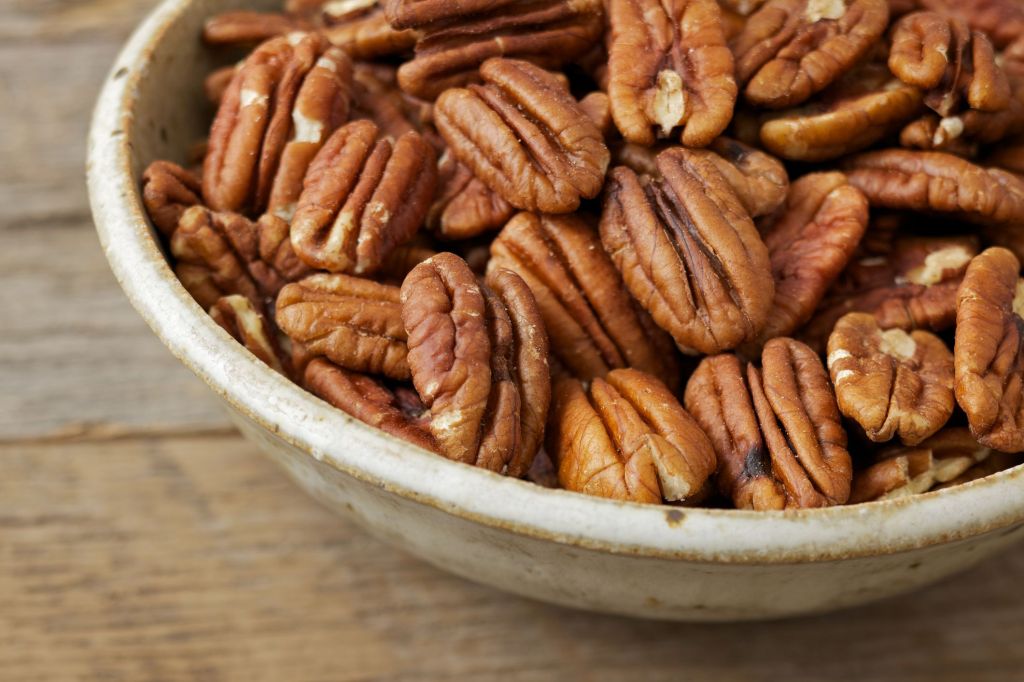
Pecans are a native North American member of the hickory family and are high in potassium and vitamin A. (My personal second favorite nut behind cashews! 🙂 ) Rich in essential fats, pecans are good for baking and are a popular ingredient in candy. Studies have shown that pecans can help to lower LDL or “bad” cholesterol. Key nutrients in pecans include protein, fiber, calcium, iron, magnesium, phosphorus, potassium, sodium, zinc, copper, manganese, selenium, vitamin C, vitamin B, pantothenic acid, folate and vitamin E. They contain essential amino acids and phytochemicals including beta-carotene.
Shelled walnuts are absolutely delicious in baked goods, sprinkled on salads, and as a topping on many desserts. The oil from walnuts is high in polyunsaturated fatty acids and tends to lower blood cholesterol. Walnut oil is used in cooking and is high in potassium, phosphorus, magnesium, and vitamin A. Key nutrients in walnuts include protein, fiber, calcium, iron, magnesium, potassium, sodium, zinc, copper, selenium, vitamin C, vitamin B, vitamin A, folate, vitamin E. They also contain alpha-linolenic acid, gamma-tocopherol, and beta-carotene.
RECIPES:
Currant Nut Dessert. (This dessert is high in the essential fatty acids found in walnuts and pecans!) Take 1 cup of plain yogurt, 1/4 cup of currants or raisins if preferred, 1/4 cup of chopped raw walnuts or pecans, 1 pinch of cinnamon, 1 teaspoon of vanilla and 1 dash of barley malt sweetener (optional). Mix ingredients together in a serving bowl and chill.
Blueberry-Oat Flax Muffins. (These are very freezer friendly when you need an on-the-go breakfast or healthy afternoon snack!) Tale 1/3 cup of mashed bananas, 3/4 cup of pure maple syrup, 3 tablespoons of coconut oil unrefined and melted, 1/2 cup of nut milk of choice (such as almond or cashew), 3 tablespoons of apple cider vinegar, 1 teaspoon of vanilla, 3/4 cup plus 1 tablespoon of oat flour, 3/4 cup of almond flour, 1 cup of tapioca flour, 1 cup of whole ground flaxseed meal, 3 tablespoons of baking powder, 1/4 teaspoon of baking soda, 1/2 teaspoon sea salt, and 1/2 cup of fresh or frozen blueberries. In a medium mixing bowl, mash the banana until smooth and there are no little chunks left. Stir in the maple syrup, coconut oil, nut milk, vinegar and vanilla. Whisk thoroughly to incorporate and create an emulsion. If the coconut oil solidifies, gently warm the mixture 10 seconds at a time in the microwave until melted again. Set aside. Scoop one tablespoon of oat flour and set aside. Into the wet ingredients, add the oat flour, almond flour, tapioca flour, flaxseeds, baking powder, baking soda, and salt. Whisk thoroughly for at least a minute ensuring no clumps remain. The batter will be thin and you’ll notice bubbles right away from the leavening. Lay a dry tea towel over the top of the bowl and rest the mixture at room temperature for 30 minutes (do not skip this part). The batter will thicken as it sets. While the batter is resting, preheat the oven to 375 degrees. Set the oven rack in the center and line a muffin pan with liners. I use the aluminum style sprayed with non stick cooking spray. Just before adding the batter to the muffin cups, in a small bowl, mix the blueberries with one tablespoon of oat flour set aside earlier. Spoon the blueberries and any remaining oat flour into the batter and gently fold the blueberries into the mixture. Scoop batter into each of the muffin cups evenly. Add a few more fresh blueberries each to the tops of the muffins and gently nudge them down into the batter. (A fun extra variation: sprinkle whole rolled oats on the top). Bake at 375 degrees for 30-32 minutes or until golden on top and tops spring back under gentle pressure. Rest in the pan for 10 minutes then remove muffins from pan onto a cooling rack to cool completely. They can be stored in a container for up to 3 days. Or they can be put in a container and frozen for up to two weeks. Thaw at room temperature!
Savory Spiced Pecan Energy Bites. Take 1/2 cup of pecan pieces, 3/4 cup of rolled oats, 1/2 teaspoon sea salt, 1/2 teaspoon of cumin, 1/2 teaspoon of garlic powder, 1/4 teaspoon of paprika, 2 tablespoons of tahini, 1 tablespoon of honey, and 1/2 tablespoon of Dijon mustard. In a food processor, pulse the oats and pecans until it becomes a fine, almost flour-like consistency. Then add the salt, cumin, garlic powder, paprika, tahini. honey and Dijon mustard. Pulse until all ingredients are thoroughly combined. Using a 1 tablespoon measuring spoon scoop out the mixture and shape into a ball. Shaping will avoid having the mixture crumble. Repeat with the remaining mixture. Store in the refrigerator.
Fruit Kabobs with Yogurt and Pecans. (This is a great healthy kid-friendly recipe as well.) Take 1/2 cup of pecans, finely chopped, 8 skewers, 2 cups of watermelon cubed, 2 cups of canteloupe cubed, 2 cups of strawberries, halved, 2 medium kiwis, peeled and cut into slices then crescents, 1 large banana, peeled and cut into 1/2 inch slices, 1 cup of plain low-fat yogurt. Thread the cut fruit onto skewers in whatever color arrangement you like. Place the yogurt and pecans in two small bowls. Dip the kabobs in yogurt and pecans and enjoy! Feel free to mix and match your favorite fruit such as grapes or pineapple and nuts!)
Have a fabulous rest of your week everyone! Be sure to be back next week as we finish up this series with pistachios, pumpkin seeds, sesame and sunflower seeds! Stay safe and well!
“UNEXPECTED KINDNESS IS THE MOST POWERFUL, LEAST COSTLY, AND MOST UNDERRATED AGENT OF HUMAN CHANGE.”
 Lemon and Rosemary