Happy Sunday and welcome to the last day of January! 2021 is off to a quick start! Hope your weekend has been full of health, happiness, and productivity! Tonight we are onto part seven of our Spices and Herbs series…all about nutmeg, oregano, paprika and parsley!
Nutmeg is the pit, or seed, of the fruit of the nutmeg tree, a tropical evergreen. (I won’t lie…it is one of my favorite spices and as I typed this, I wanted to either rewind or fast forward to Thanksgiving and Christmas again!) Its flavor is piney and citruslike with a sweet, and bitter, warm taste. Oil of nutmeg is used to disguise the taste of various drugs and as a gastrointestinal stimulant. Both nutmeg and mace (the dried, ground outer coating of the nutmeg seed) are used to relieve gas and to ease nausea, vomiting, and diarrhea. Nutmeg has anti-inflammatory properties and an interesting fact, is an ingredient in True Man’s Decoction, a traditional Chinese herbal tonic to dispel infection from the digestive tract and restore the body’s fluid metabolism. Available both whole and ground, nutmeg is commonly used in sweet foods such as puddings, cakes, and cookies-and sprinkled on eggnog. Nutmeg also complements vegetables, pasta, grains, and cheese. Mace can be used in the same way as nutmeg. Key nutrients in nutmeg include vitamin C, vitamin A, vitamin B, vitamin E, calcium, iron, magnesium, potassium, zinc, copper, selenium, folate and fiber.
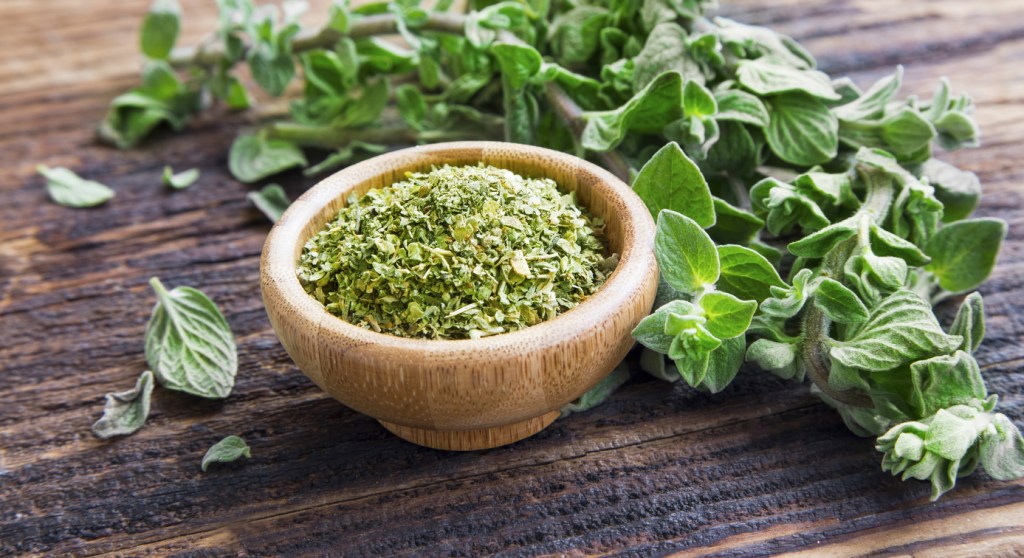
Also called wild marjoram and Mexican wild sage, oregano has a peppery flavor with a hint of sage and thyme. Chinese doctors have used oregano for centuries to treat fever, vomiting, diarrhea and skin problems. It helps to loosen and remove mucus. It is a digestive aid and is though to help get rid of intestinal parasites. Oregano is known to have power antioxidant properties. Used in bath oils, oregano helps relieve aches and stiff joints. (**I make bath salts with peppermint, rosemary and oregano essential oils to help with sore muscles and achy joints from the flu!) The essential oil is also beneficial used in a diffuser or an aromatherapy lamp–or simply place a single drop on a cotton ball and sniff it three or four times daily. It will be absorbed directly into the sinuses. To make a spicy herbal infusion, add 1 – 2 teaspoons of dried oregano to a cup of boiling water; steep for 10 minutes then strain and drink. Oregano is used in many Mexican and Italian dishes, including pizza and pasta sauces. Its distinctive flavor accents tomatoes, sweet peppers, zucchini, and eggplant. Oregano combines well with soups, tomato dishes, stews, and a variety of vegetables too. Key nutrients include calcium, potassium, phosphorus, iron, magnesium, zinc, copper, selenium, fiber, folate, vitamin A, vitamin C, vitamin B, and vitamin E.
Originally from Hungary, paprika is a pungent, savory powder made from ground dried mild red peppers. Sweet paprika is made from only the pepper pods. Hotter versions contain the ground seeds and ribs also. The phytosterols in paprika have anti-inflammatory and immune-boosting properties. Add paprika to meats, salads, relishes, eggs, and vinegar. Key nutrients in paprika include vitamin A, vitamin B, vitamin C, vitamin E, calcium, iron, potassium, phosphorus, magnesium, zinc, copper, selenium, folate and fiber.
Parsley is a familiar herb with a mild, agreeable flavor that is used mostly as a garnish or seasoning. Dried parsley leaves, root, or seed taken as a tea or tincture, eases digestion, is a diuretic, helps in the secretion of urine and acts as a mild laxative. It is also useful for indigestion. Munch fresh parsley sprigs to help freshen breath. Parsley is helpful for dieters because it has strong diuretic properties. TIP: when using parsley medicinally, do so sparingly because it is very powerful. For a soothing tea, use 2 teaspoons of the dried herb, or 1 teaspoon of lightly crushed seed per cup of boiling water; steep the tea for ten minutes, then strain and drink. Key nutrients in parsley include vitamin A, vitamin E, vitamin C, calcium, iron, potassium, phosphorus, magnesium, selenium, copper, zinc, vitamin B, folate and fiber.
RECIPES:
Asparagus with Spicy Nutmeg Butter. Take 1/4 teaspoon ground nutmeg, 1/4 teaspoon garlic salt, 1/8 teaspoon of ground red pepper, 2 tablespoons of melted butter of your choice, 30 medium fresh asparagus spears (about 2 bunches), 1 tablespoon olive oil, 1/4 cup of pine nuts, toasted for garnish. Preheat your broiler. Mix nutmeg, garlic salt, and pepper into melted butter. Wash and break asparagus. Arrange asparagus in a single layer on a large, rimmed baking pan lined with foil. Drizzle with oil and roll around to coat evenly. Broil asparagus 4-6 minutes or until crisp-tender turning once. Place in a serving dish and pour seasoned butter over asparagus. Garnish with nuts.
Spicy Nutmeg Carrots. Take 1 (16 ounce) package of baby carrots, 1 tablespoon butter of your choice, 1/4 teaspoon of ground nutmeg, 1/4 teaspoon of garlic salt, and 1/8 teaspoon cayenne pepper. Rinse the carrots and place on a small microwave dish. Microwave for 5 to 6 minutes or until crisp tender, stirring once. Stir in the butter, nutmeg, garlic, salt and red pepper, toss to coat and serve.
Parsley Pesto. Take 2 cups of fresh baby spinach, 1 cup of flat leaf parsley (leaves and stems), 1/2 cup of roasted pecans, 6 tablespoons of olive oil, 1 clove garlic, chopped and sea salt and pepper. In a saucepan of salted boiling water, blanch the spinach for 30 seconds. Drain and squeeze the spinach to remove all excess water. In a food processor, or blender, puree the spinach with the remaining ingredients. Season with salt and pepper. Set aside. Delicious with toasted bread or over fish or pasta.
Paprika Pita Chips. Take 1/4 cup of vegetable oil, 1/4 teaspoon of sea salt. 1/4 teaspoon of paprika, and 3 pita breads, 7 inches in diameter and split in half. In a small bowl, mix oil, salt and paprika. Brush the rough sides of the pita with the oil mixture. Cut each circle in 8 points. Put the pita points side by side, oiled side on top, on a large baking sheet. Cook in the center of a preheated oven of 350 degrees for about 12 minutes or until pita chips are golden and crispy. Put the pita chips on a rack and let them cool. (You can keep these in a storage container for up to 3 days).
Have a great first week of February! We only have two posts remaining in this series! Next week will be all about rosemary, saffron, sage and tarragon. Stay safe and well!
“Life’s problems wouldn’t be called “hurdles” if there wasn’t a way to get over them.”
 Lemon and Rosemary
Nutmeg is one of my favorite spices also. It is. used extensively in Sicilian recipes. I always add it to the ricotta filling of my lasagna and manicotti.
LikeLike
Hi! Happy Wednesday. I love this tip and can’t wait to try it. Thanks for sharing these wonderful ideas so I can pass them along!
LikeLiked by 1 person