Happy Saturday everyone! I hope the start of your weekend has been a good one. Here we are already to the final week of April! Wow! We had two snowstorms this week so today’s 70 degree weather is a real treat! Tonight’s post is all about the mighty soybean!
An anonymous author has said that “nutritionally, the humble soybean is a 5-carat diamond in the rough.” No other single food has as many uses or is as versatile as the common soybean. Soybeans are a complete protein source, and provide more protein than any other legume. Because of their bland flavor and high nutrient content, soybeans can be made into many different nutritious foods. As a whole, Americans have not acquitted a taste for the naturally processed forms of soybeans found in the traditional Asian diet, such as tofu, miso, tempeh, tamari and soymilk. However, the “next generation” of manufactured soy foods is increasingly popular. These are highly refined products such as soy ice cream, cheese, yogurt, oil, burgers, and frozen desserts. Commercial applications for soybeans range from soap to paint to earth-friendly printing ink. Thought the United States grows half of the world’s soybeans (as a crop, soy is second in importance only to corn), most of them are ground into meal for animal feed or exported, particularly to Japan, where the soybean is a principal food. Soy protein has been used for decades as a meat extender. It also is added to numerous foods as a thickener and emulsifier. Textured vegetable protein, known as TVP, which is made from defatted soy flour, is used in simulated meat products, such as veggie burgers. TVP is the most concentrated source of soy protein, with as much as 23 grams per ounce. Several manufacturers, such as Lumen Foods (Heartline Meatless Meats), have a good textured protein product made entirely from soybeans. The meatlike texture works well in casseroles, stews, and soups.
The soybean is a self-contained protein factory. Through the action of bacteria living in its roots, the soy plant can make its own nitrogen fertilizer to stimulate protein production. Research conducted at the Massachusetts Institute of Technology has shown that the soybean produces such high-quality protein that it can supply the essential amino acids the body needs daily. Soybean protein is high in quantity as well: one half cup of cooked soybeans contains 14 grams of protein. The nutrients in soybeans are fiber, protein, calcium, iron, magnesium, phosphorus, potassium, sodium, zinc, copper, manganese, vitamin C, vitamin B, pantothenic acid, folate, lipids, and amino acids. Phytochemicals include daidzein, genistein, glycitin, glycitein, ipriflavone, beta-sitosterol, gamma-sitosterol, lignin, phytic acids, lecithin, and protease inhibitors.
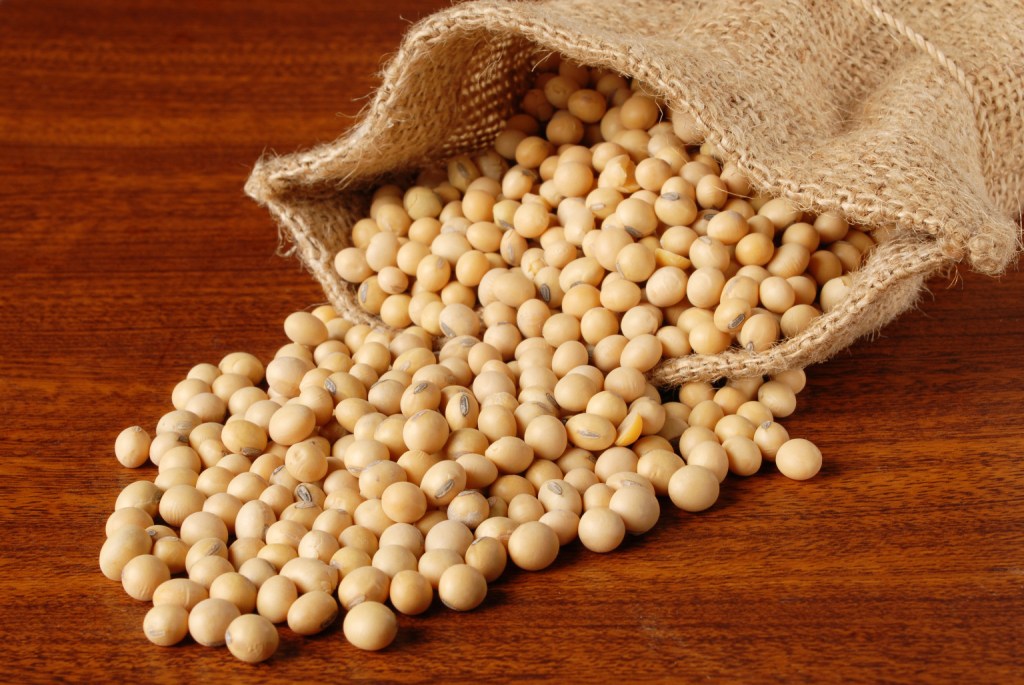
Soybeans can be either green (fresh) or dry. Green soybeans are harvested just before maturity, when the beans are still green and have a sweet flavor. Green soybeans can be enjoyed as a snack, served as a main vegetable dish, stir-fried, or added to soups and salads. They can be boiled in the pod (Which are not eaten) or shelled. They are also sometimes called edamame. Some Asian markets stock fresh green soybeans, however, they are most likely to be found in the frozen food section of natural food stores. Refrigerate fresh soybeans and use them within two days. Frozen, they will keep for several months. Dry soybeans, which are light tan, yellow, or black, are fully mature beans. They are hard and take the longest of the legumes to cook-at least three hours even after being soaked overnight. Once cooked, they have a strong bean flavor. Use them in soups, stews and casseroles. They can also be ground up and made into burgers and loaves. Natural food stores and supermarkets generally carry whole dry soybeans. They can be purchased prepackaged or in bulk. They have a long shelf life when kept in an airtight container.
Major soy foods include soymilk, tofu, miso, tempeh, soy oil, and tamari sauce. There are some lesser known ones. These include the following: Natto. Made from fermented, cooked whole soybeans that are mixed with a bacteria culture and aged in plastic bags, natto can be used over rice, in miso soups and with vegetables. Soy chesse. Made from soymilk, it has creamy texture and can be substituted for dairy sour cream or cheese. Soy fiber. Okara, soy bran, and soy isolate are generous sources of high quality dietary fiber. The pulp left when the liquid is pressed from the soybean, okara has a coconut flavor that works well,in granola and cookies. Soy bran is the fibrous material extracted from soybean hulls. It is used as a food ingredient. Soy isolate is concentrated soy protein in fiber form. Roasted soy nuts and soy nut butter. Similar to peanuts, soy nuts, soy nuts are sold as a crunchy snack food. They are made from roasted whole soybeans. Soy nut butter, an alternative for those allergic to peanuts, is produced by crushing soy nuts and blending them with soy oil. Soy Wonder makes a delicious nut spread. Soy mayonnaise. With 70 percent fewer calories than regular mayonnaise, this is good on sandwiches, on veggie burgers, or as a base for a dip. Nayonaise, made by Nasoya, is one brand of soy mayonnaise.
RECIPES:
Roasted Soybeans. Take fresh soybeans still in shells, nonstick spray, sea salt. Bring a large pot of water to a boil. Add in soybeans (still in shells) to boiling water. Boil for 4 minutes. Drain. Rinse with cold water. Remove each bean from its pod. This takes some time if you have lots of soybeans. Removing the beans when the shells are still wet makes it easier. Keep the beans. Compost/discard the pods. Blot the beans with paper towels to remove any excess moisture/water. Preheat the oven to 350 degrees. Spray a pan with non stick spray. Place the beans in a single layer on pan. Sprinkle with sea salt. Bake for 15 minutes. Stir the beans. Bake for another 15 minutes. Stir the beans. Repeat until they are roasted. Beans will take 30 minutes – 1.5 hours until they are done, depending on how wet they are, how many there are, etc. Review and stir every 15 minutes to make sure they do not burn! Let cool and eat and enjoy!
Soybean hummus. Take 1 can (15 ounces) of soybeans or 1 cup of frozen edamame (green soybeans, shelled). Liquid from canned soybeans if used. 2 to 3 tablespoons lemon juice (depending upon taste), 1 1/2 tablespoons of tahini, 1 clove of garlic (crushed), and 1 teaspoon sea salt. In a blender or food processor, blend soybeans, lemon juice, tahini, garlic, and salt until thoroughly mixed and smooth. Add liquid from soybeans until desired consistency, creamy and paste-like. Serve immediately or cover and refrigerate for about an hour.
Have a wonderful rest of your weekend! I look forward to our next post together when we talk about the GOOD dietary fats!!!
“Happiness is an attitude. We either make ourselves miserable or happy and strong. The amount of work is the same.”
 Lemon and Rosemary