



Pass the Popcorn
A blog where we can journey together for a healthier life
When my daughter and I were shopping at the mall this past Christmas, we went by the enclosed play area several times. It was an enclosed area with animals you could slide down, and ladders you climb up and other interactive play things. When my kids were little, they loved the mall play areas. We need one for grown up Moms over 40. Where we can play carefree, no shoes allowed, just in our socks. No one can interrupt us and we can be carefree for a little while.
#change #growth #motivation #inspiration #opportunity #perspective

When I was growing up, we never had a car. So my key to the world for school, work and play was a bicycle that belonged to my material grandmother. I spent a week putting a new basket on it, repainted it and did the old playing card in the tire spokes accessory!!
Even growing up in western New York with lake effect snow, if conditions allowed, I even road it in winter. It took me to school, countless babysitting jobs, errands downtown, bringing home mountains of books each Saturday from the library.
When I left for college, I replaced the basket, freshened up the paint and gave it to my mom and she used it to bike to work each day to the hospital for she was a nurse’s aide.
When she retired, she donated it to a friend who put it in her garden!
He decided to visit Mr. Henderson next, to get his perspective on these so-called
“disagreements.” Henderson’s house was a modest bungalow, slightly more lived-in
than Mrs. Gable’s, with a well-used garden shed and that vintage truck parked,
predictably, on the street. Mr. Henderson, a man with a kind face etched with the
lines of a life lived outdoors, greeted Brody with a handshake that was firm and warm.
“Sheriff,” he said, wiping grease from his hands with a rag. “Heard about Elias. Tough
break. Though, I imagine things are a bit quieter around here now.”
Brody managed a faint smile. “Mr. Henderson, I’m speaking with the neighbours about
Mr. Thorne. I understand you and he had some… differences.”
Henderson chuckled, a low, rumbling sound. “Differences is a polite word for it,
Sheriff. Elias Thorne and I had a philosophical divide when it came to the definition of
‘neighbourly conduct.’ He believed it involved constant surveillance and nit-picking; I
believed it involved minding your own business and waving hello.”
He gestured towards the vintage truck. “This old girl,” he said, patting its hood
affectionately. “She’s my pride and joy. Elias thought she was an eyesore. Claimed the
exhaust fumes were a health hazard, despite her being meticulously maintained. He
even contacted the county planning department, trying to get it classified as an
‘abandoned vehicle,’ can you believe it? I had to show them registration papers and a
notarized letter from my mechanic just to prove it wasn’t being neglected.”
Henderson shook his head, his expression turning serious. “But it wasn’t just the
truck. It was everything. He had this way of looking at you, like you were somehow
beneath him, like your very existence was an inconvenience to his grand design. He’d
always find something. The way I mowed my lawn, the time I took out my bins, even
the colour of my curtains. He’d ‘suggest’ improvements, frame them as
‘community-minded advice,’ but it was always about him, about bending everyone to
his will.”
He spoke of Thorne’s attempt to push the noise bylaw. “He came to me too, asking for
my support. I told him, Elias, my tinkering rarely goes past nine o’clock, and frankly, if
I can’t work on my own truck in my own driveway when I please, then what’s the
point? He got that cold look in his eye, the one that promised a thousand little paper
cuts. He said something about how my ‘stubborn refusal to adapt’ would eventually
lead to ‘unforeseen complications.’ I didn’t think much of it at the time, just another
one of his pompous pronouncements.”
Brody noted the consistency in the neighbours’ accounts. Thorne wasn’t just disliked;
he actively sought out and manufactured conflict. His “disagreements” were not
isolated incidents but a pattern of behaviour, a calculated effort to assert dominance
and control over his environment and the people within it. The mention of Clara
Bellweather surfaced again, albeit indirectly.
“Did you ever see Mr. Thorne with Ms. Bellweather?” Brody asked, wanting to
cross-reference information.
Henderson’s brow furrowed slightly. “Clara? Yes, I saw them together a few times. At
the village fêtes, usually. He’d have his arm around her, looking the picture of the
cultured patron and his muse. But there was always something… off. He seemed to
treat her more like an acquisition than an equal. I remember seeing them arguing
once, near the old bandstand, after the Harvest Festival last year. It was hushed, but
you could tell she was upset. Thorne just stood there, arms crossed, a dismissive look
on his face, before he turned and walked away, leaving her standing alone. It wasn’t a
good look.”
This detail, a hushed argument at the Harvest Festival, the very night of Thorne’s
death, was significant. It corroborated Clara’s account of their relationship ending
badly, and it placed her in a position of emotional turmoil around the time of the
murder. Brody thanked Mr. Henderson, the conversation leaving him with a clearer,
and more disturbing, picture of Elias Thorne. The man’s ruthlessness wasn’t confined
to the boardroom; it permeated his personal life, creating a web of animosity that
stretched across his neighbourhood.
As Brody drove away, he considered the implications. While Clara Bellweather
certainly had the motive of a scorned lover, the sheer number of people Thorne had
antagonized, the depth of their grievances, presented a broader canvas of potential
suspects. The fence dispute with Mrs. Gable, the truck issue with Mr. Henderson, the
community garden slight to Mrs. Peterson – these were not just minor annoyances.
They were testaments to Thorne’s aggressive, overbearing nature, his inability to
tolerate anything that didn’t align with his own rigid worldview.
He recalled Mrs. Gable’s words: “He seemed to thrive on it, on creating these little
pockets of discord.” Was it possible that one of these “pockets of discord” had finally
ignited into something far more destructive? Had Thorne, in his relentless pursuit of
control, finally pushed someone too far? The seemingly petty disputes over property
lines and parking spaces now appeared as embers, waiting for the right gust of wind
to fan them into a raging inferno. Thorne had made many enemies, not through grand
gestures or public pronouncements, but through the relentless accumulation of
small, personal grievances. Each neighbour’s tale was a brushstroke, adding to a
portrait of a man who was, at best, a difficult neighbour, and at worst, a man who
actively cultivated his own downfall through sheer, unadulterated belligerence. The
question now was, which of these accumulated grievances, if any, had led to Elias
Thorne’s final, fatal encounter? The orchard, Brody mused, where Thorne’s body was
found, was a place of quiet growth and natural cycles. It felt like a cruel irony that
such a place had become the stage for a drama fueled by the unnatural, festering
animosities of men. The meticulous Mrs. Gable, the placid Mr. Henderson, the
dedicated Mrs. Peterson – all had their own stories, their own lines that Thorne had
crossed, their own patience that he had tested. And Brody had a growing suspicion
that one of these lines, when finally transgressed one too many times, had proved to
be the fatal one. The tranquil façade of the neighbourhood hid a simmering
undercurrent of discontent, a testament to Thorne’s pervasive influence. He had
managed to turn simple neighbourly coexistence into a battleground, and the
casualties, it seemed, were not limited to damaged pride or frayed nerves. Brody
found himself wondering if the same arrogance that made Thorne dismiss Clara
Bellweather’s affections had also blinded him to the very real dangers lurking just
beyond his perfectly manicured hedges. He had collected grievances like he collected
other assets, perhaps never truly believing any of them would come back to collect on
their debt.
Sheriff Brody’s next stop was the community hall, a sturdy, unpretentious building
that served as the nerve center for the upcoming Autumn Apple Festival. Inside,
amidst a whirlwind of flyers, half-finished craft projects, and the faint scent of mulled
cider, sat Martha Jennings, the festival’s chief organizer. Her desk was a monument to
controlled chaos, piled high with spreadsheets, contact lists, and a half-eaten apple
that looked as if it had been abandoned mid-bite. Martha, a woman whose efficient
demeanor was slightly frayed by the mounting pressures of the festival, greeted
Brody with a weary but welcoming smile.
“Sheriff Brody, please, come in. I must confess, I was half-expecting you. Elias
Thorne’s… unfortunate end has cast a rather large shadow over our preparations.”
She gestured to a slightly less cluttered chair. “Coffee? Or something stronger?”
Brody opted for coffee, accepting the steaming mug she pushed across the desk.
“Thank you, Ms. Jennings. I’m trying to get a clearer picture of Mr. Thorne’s activities
leading up to his death. I understand he was involved in the festival planning?”
Martha sighed, running a hand through her already disheveled blonde hair. “Involved?
That’s putting it mildly, Sheriff. Elias Thorne didn’t just ‘get involved’; he
commandeered. He had this… vision for the festival. A vision that, frankly, seemed to
expand and become more extravagant with each passing day. He presented himself as
a benefactor, of course, a major sponsor, and in many ways, he was. But his
‘contributions’ came with a rather hefty price tag of control.”
She leaned back, her gaze distant for a moment. “He was particularly insistent on
certain roadside displays. You know, the ones that line Orchard Road as you approach
the main festival grounds. He had very specific ideas about how they should be
presented. He wanted elaborate, almost theatrical setups. Fairy lights draped in every
available branch, oversized apple-themed sculptures, these… animated scarecrows
that looked perpetually startled. It was all a bit much, even for a festival. We have a
budget, you see. A very real, very finite budget.”
Brody took a sip of his coffee, the warmth a welcome contrast to the chill he felt when
thinking about Thorne’s death. “And he was pushing for these particular displays?”
“Pushing? He was bulldozing, Sheriff. He’d present these grand plans, complete with
detailed sketches and cost estimates that made our eyes water. When we’d try to
temper his enthusiasm, to suggest more practical, budget-friendly alternatives, he’d
become… quite adamant. He had this way of looking at you, like you were personally
thwarting his genius. He’d talk about the ‘impact,’ the ‘wow factor,’ and if we dared to
question the feasibility, he’d casually mention his sponsorship, and how a significant
portion of the funding could be… re-evaluated, should the festival not align with his
aesthetic sensibilities.”
Martha’s voice tightened with a familiar frustration. “It was a constant battle. He’d
suggest a centerpiece, something truly outlandish – a life-sized replica of a colossal
apple that lit up at night, for instance – and when we explained the prohibitive cost,
he’d sigh, dramatically, and say something like, ‘Well, if you’re not going to aim for
excellence, perhaps I should reconsider where my investment is best placed.’ It was
thinly veiled blackmail, Sheriff. He knew we relied on his funding, especially for the
more ambitious aspects of the festival.”
She picked up a crumpled piece of paper, smoothing it out with nervous fingers. “This
is one of his proposal drafts for the roadside displays. He’d emailed it to me just a few
days ago. See? He’s circled this specific stretch of Orchard Road, right near where…
where he was found. He’d sketched out this enormous archway, adorned with
flashing lights and miniature apple orchards. He called it ‘The Gateway to Autumn’s
Bounty.’ It would have cost a fortune, a fortune we simply didn’t have, and frankly, a
fortune that seemed entirely excessive for a temporary roadside decoration.”
Brody examined the sketch. It was indeed elaborate, bordering on gaudy. The detail
Thorne had put into it was almost obsessive, a reflection of his need for control and
his desire to impose his vision on the world. “And this was the area he was particularly
focused on?”
“Yes,” Martha confirmed, her gaze drifting towards the window, as if seeing the road
in her mind’s eye. “He’d been talking about that particular section for weeks. He said
it was the ‘critical entry point,’ the first impression festival-goers would have. He
wanted it to be grand, unforgettable. He even suggested hiring a special lighting
company, ones that typically do theatrical productions, rather than our usual local
electricians. He was very specific about the type of LED bulbs, the sequencing of the
lights… it was exhausting. It felt less like planning a community event and more like
catering to the whims of a tyrannical art director.”
“Did he have any specific ideas for the scarecrow display in that particular area?”
Brody asked, recalling the macabre detail of Thorne’s body found partially obscured
by one of the festival’s scarecrows.
Martha paled slightly at the mention of the scarecrows. “The scarecrows… yes. He
was also very opinionated about them. He wanted them to be more… realistic. He said
the usual jolly, straw-stuffed figures were ‘quaint but ultimately uninspired.’ He
wanted them to be unsettling, to have a sense of ‘purpose.’ He even brought in a
prototype, a rather grim-looking thing with a tattered coat and a menacing grin
carved into its burlap face. It was meant to be a guardian of the orchard, he explained.
I found it deeply unnerving, Sheriff, and frankly, a little frightening for families with
young children. But Elias insisted. He said it would add an element of ‘intrigue’ and
‘authenticity’ to the agricultural theme.”
She shuddered involuntarily. “I tried to push back. I told him that scarecrows were
supposed to deter birds, not inspire existential dread. He just looked at me with that
cold, assessing gaze and said, ‘Ms. Jennings, you worry too much about trivialities.
This is about creating an experience. And sometimes, experiences require a touch of
the formidable.’”
The mention of a “formidable” scarecrow, particularly one designed to be unsettling,
sent a shiver down Brody’s spine. He remembered the unsettlingly lifelike quality of
the scarecrow near Thorne’s body. He made a mental note to revisit that particular
exhibit.
#mystery #skeletoninthehayride #adventure #thriller #fiction #newbook

My apologies if the title sounds lame 🙂
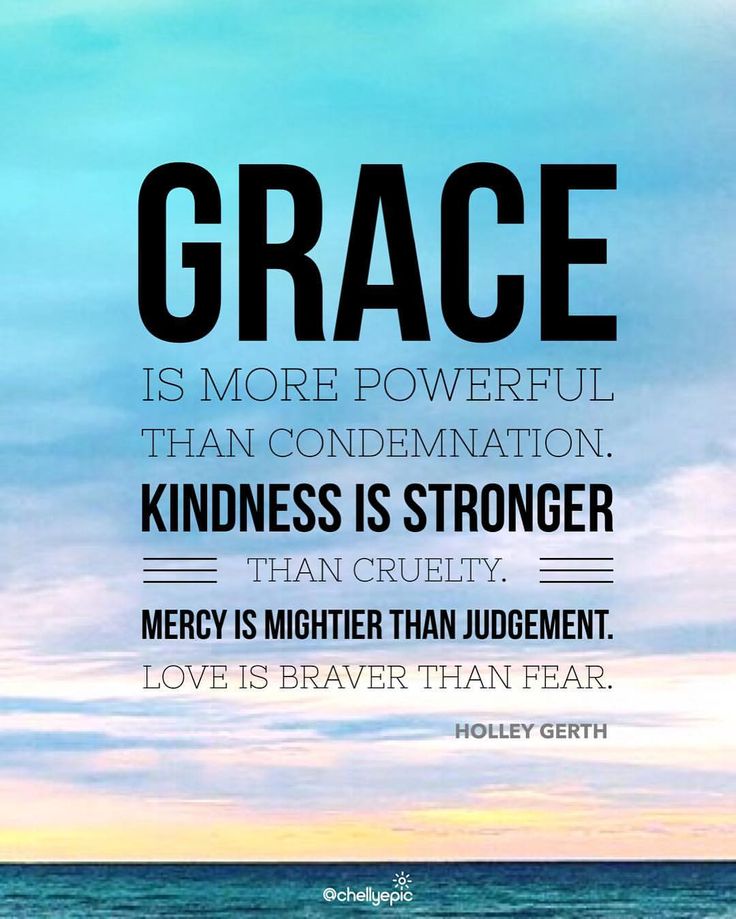
However, one of the key components of my personality is that I detest conflict, bullying, negativity and the sport of putting others down.
Our world fuels itself on mocking, who can come up with the biggest put down of the day or who can be viral this week for roasting someone else.
My mission for 2026 is to use my blog, my YouTube channel, my platforms to be a great Encourager. To be that uplifting voice when life is hard, or a source of strength when there is no where else to go.
I would love it if the Lord does allow me to have a very long life….
It would allow more time to serve Him.
It would allow more time with my husband, especially since we have several “bucket” list things we want to do together.
I would definitely enjoy having additional years with my children.
(and think of how much more coffee I get to drink! )
I am already doing a couple of things differently in 2026:
I am working on reading the whole Bible during the year plan.
I am starting a new job in the field I have always wanted – law.
I started going to the club three nights a week with my husband.
#grace #kindness #mercy #motivationalpost #inspiration #faith
Mine would have a huge smiley face emoji and say “Smile! Pass it on!”


 Lemon and Rosemary